National Choking Awareness Day: CPR Training Updates and Choking Rescue Skills
National Choking Awareness Day is observed every year on March 28 to raise awareness about choking emergencies and the importance of learning life-saving response skills. For CPR instructors, caregivers, teachers, and families, National Choking Awareness Day is a reminder to review choking rescue techniques and stay aligned with the latest guidance from organizations such as the American Heart Association (AHA) and the American Red Cross (ARC).
Choking can occur suddenly when food or objects block the airway. When a person cannot cough, speak, or breathe, immediate action is necessary. By promoting National Choking Awareness Day, communities can encourage more people to learn CPR and First Aid skills that help save lives.
For official guidance on CPR and choking rescue techniques, visit:
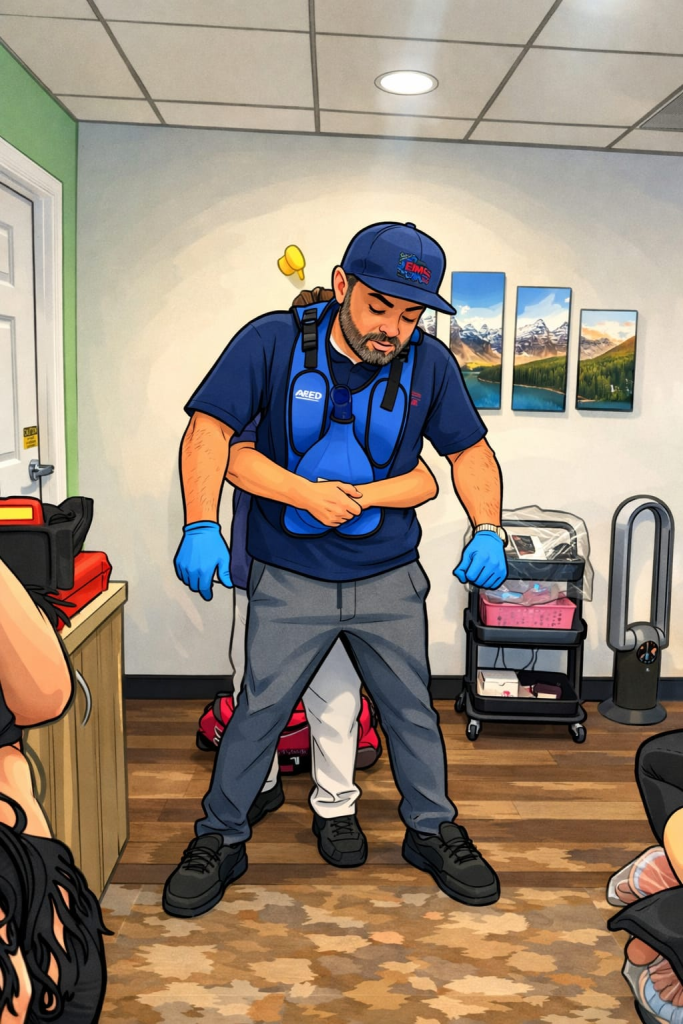
Historically, different programs sometimes taught choking rescue in slightly different ways. The American Red Cross has long taught alternating back blows and abdominal thrusts for adults and children, while other programs emphasized abdominal thrusts first.
Today, CPR programs are increasingly aligning around consistent rescue techniques so responders receive clear, standardized training.More lives can be saved.
Signs of a Choking Emergency
When responding to choking emergencies involving adults or children, trained responders may take the following actions:
- Confirm the person is choking and ask if they need help.
- Deliver five firm back blows between the shoulder blades.
- Perform five abdominal thrusts.
- Continue alternating back blows and abdominal thrusts until the obstruction clears.
- If the person becomes unresponsive, activate emergency medical services and begin CPR.
These steps provide multiple attempts to remove the airway obstruction and restore breathing.
Practicing these techniques during CPR and First Aid training classes helps build the confidence needed to act quickly when emergencies occur.
Infant Choking Rescue Steps
Choking rescue for infants under one year old requires a different approach.
Rescuers should perform:
- Five back blows
- Five chest thrusts
- Continue alternating until the object is removed or the infant becomes unresponsive
Abdominal thrusts should never be used on infants.
These life-saving techniques are taught in most CPR certification programs and pediatric First Aid classes.
How Instructors Can Promote National Choking Awareness Day
To support National Choking Awareness Day, we are encouraging CPR instructors and training centers to help spread awareness online.
This year, we are launching a Choking Awareness Challenge on social media to help educate more people about choking emergencies and life-saving rescue skills.
How the Challenge Works
- Share a short video about choking awareness or choking rescue tips.
- Post the video on social media.
- Tag fellow CPR and First Aid instructors.
- Use the hashtag #ChokingAwarenessChallenge.
By working together, instructors can expand awareness and encourage more people to learn CPR and choking rescue skills.
Why National Choking Awareness Day Matters for CPR Training
Training in CPR and First Aid prepares people to respond to choking emergencies, cardiac arrest, injuries, and other medical situations.
Benefits of CPR and First Aid training include:
- Learning life-saving choking rescue techniques
- Recognizing emergencies quickly
- Building confidence to respond under pressure
- Helping protect families, workplaces, and communities
National Choking Awareness Day serves as a reminder that life-saving skills can make the difference when seconds matter.